
AI video ads for businesses in Chennai work best when the idea is bigger than a set, a location or a shoot day: a product in a world you cannot build, ten hooks from one concept, or a Tamil and English version without a second crew. They work worst when the ad has to show a real product, a real face or a price with complete accuracy, which is why most professional AI ads are hybrids. This guide is for owners and marketing leads of Chennai businesses with a monthly ad budget of roughly ₹25,000 to ₹3 lakh. It covers what AI ads do well, seven use cases by sector, when a live shoot still wins, and what a professionally made AI ad costs in rupees.
Table of Contents
What can AI video ads do for businesses in Chennai?
An AI video ad is an ad where some or all of the moving picture is generated by a model rather than filmed. In practice it is rarely all generated. The real product or presenter is filmed as a live plate, the environment is generated, and the two are composited and graded in the edit.
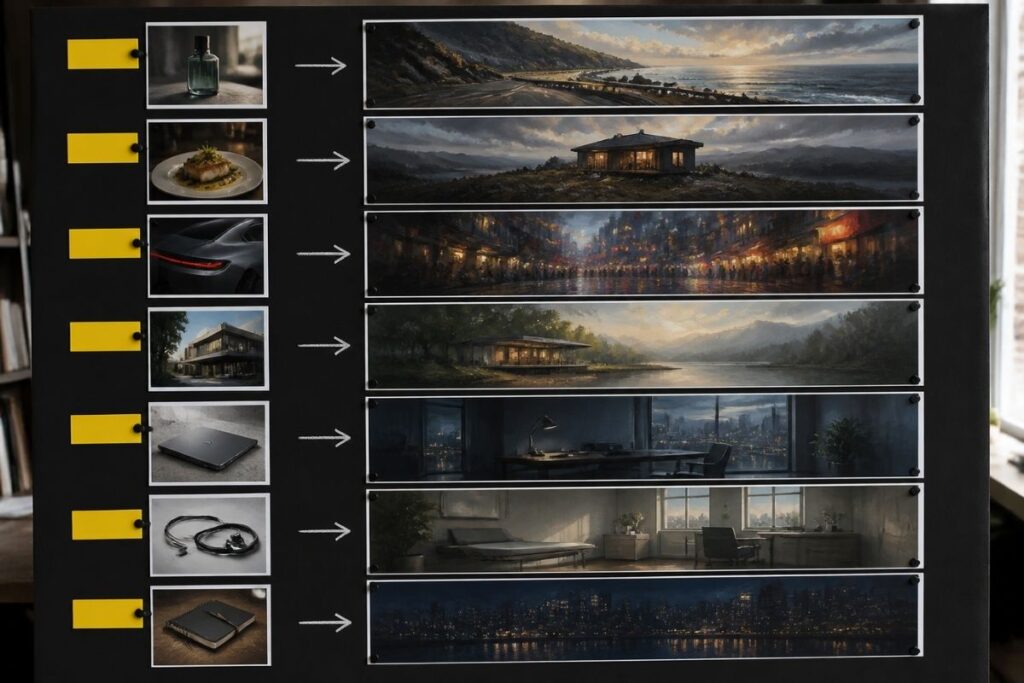
That split matters because it decides what AI is good for. Generation handles environments and sets that cannot be built, stylised or scale-bending visuals, crowds, weather, time of day and background detail. A camera still handles the actual product and packaging, exact brand colours and textures, faces meant to read as real customers or staff, and any on-screen claim, price or fine print.
For a Chennai business the practical gains are three. You can show the product somewhere a Guindy studio could never be dressed to look like. You can get several hook and end-card variants from one approved concept for Meta and Google testing. And you can adapt the same ad into Tamil, Hindi and English through voiceover and subtitles rather than a re-shoot.
Seven AI video ad use cases by Chennai business type
D2C and e-commerce brands
The product is filmed on a clean plate so the label and finish are exact; the world around it is generated. A skincare bottle on a monsoon-lit balcony, a snack pack on a stadium concourse, a candle in a cabin in the hills. AI product ads Chennai brands run on Meta are usually this hybrid, with three or four hook variants for testing.
Real-estate developers
A project that exists only as a render can become a walk-through film before the first slab is cast. AI generates the finished streetscape, landscaping and evening light; the brochure render anchors the building. On-screen prices, RERA details and square footage stay as typed graphics, never generated.
Clinics and hospitals
AI suits explainer ads: how a procedure works, what a diagnostic scan shows, why a check-up matters. Stylised anatomy and calm generated interiors read well. Doctors and real patients should be filmed, and any medical claim stays as reviewed text, so these ads are hybrids by design.
Restaurant chains
Food is a texture problem. The dish is filmed as a plate; AI handles the setting, from a Marina sunset to a festival street. Menu launches, delivery offers and branch openings can share one generated world with the dish swapped on each variant.
Education institutes
Campus tours, course explainers and placement-season ads can use generated classrooms, labs and city skylines without disrupting a working campus in OMR or Tambaram. Faculty, toppers and real students should be filmed with consent, and placement figures stay as typed graphics.
Auto dealerships
A new model can be shown on a coastal road, a mountain pass and a night-time city street from one set of filmed plates. The vehicle plate keeps the exact colour and badge; the roads are generated. Test-drive offers and on-road prices are added as graphics.
IT and SaaS firms
Software has no physical product, which makes it a natural fit for generative AI commercials: abstract data, dashboards brought to life, a concept visualised rather than described. Customer testimonials and founder faces, however, should be filmed. An AI presenter is fine for explainers if it is disclosed on screen.
When AI beats a live shoot, and when it does not
AI is not always cheaper and not always better. The honest call is made at the concept stage, before anything is generated.
AI usually wins when:
- The idea needs a location, set or scale a Chennai shoot cannot deliver on budget or on time.
- The media plan needs many variants: hooks, treatments, end-cards and ratios from one concept.
- The product exists only as a render and the launch date will not move.
- The same ad has to run in Tamil, Hindi and English.
- The look is openly stylised, so a generated frame is a feature rather than a flaw.
A live shoot usually wins when:
- The ad is about a real place, a real team or real customers, and the audience needs to recognise them.
- The product’s exact colour, texture or finish is the selling point, and there is no plate to composite onto.
- The script relies on a performance, a reaction or a conversation.
- The ad is a 15-second offer where a half-day shoot is already cheap and fast.
- The brand’s trust depends on being seen as real, such as a hospital or a school.
Most briefs land in between. That is why the usual answer is a hybrid, and why you should expect a production company to say “shoot this part” rather than generate everything.
Will the ad look AI-generated?
Only if the idea wants it to, and only if the tells are ignored. The usual giveaways are hands, on-screen text, reflections, repeating background detail and faces that hold an expression a beat too long. A disciplined workflow plans shots around them, keeps generated clips short and cuts on movement, so no frame sits still long enough to be studied.
Disclosure is now a rule, not a courtesy. India’s amended IT Rules, in force from 20 February 2026, require synthetically generated content to carry a clear label. For an ad that uses an AI presenter, avatar or voice, put the disclosure on screen or in the caption. No producer should recreate a real person’s face or voice without written consent.
What does an AI video ad cost in Chennai?
AI video ad cost in Chennai follows four tiers, and each tier buys a different job. The figures below are published Indian rates from named sources; One Dot Direction does not publish a rate and quotes against the brief.
| Tier | Published Indian range | What you get |
|---|---|---|
| DIY with an AI tool | ₹1,500–₹25,000 a month per tool, plus your time | Template or prompt-driven clips; no strategy, plates or human edit; brand accuracy is on you |
| Freelancer using AI | ₹15,000–₹75,000 per project | One person generates and edits; limited art direction; revisions and rights vary |
| Hybrid production company (single social ad) | ₹25,000–₹75,000 for a 15–30 second social ad; ₹40,000–₹2 lakh per project at a small agency | Concept, storyboard, live plates, generation, human post, ratios and variants |
| Multi-scene AI commercial | ₹75,000–₹1.5 lakh for a 30-second film; brand-grade films reported at several lakh | Scripted, storyboarded, voiceover, music, multiple scenes and languages |
For context, DigiStreet puts a conventional 30-second TVC in India at roughly ₹5 lakh before talent, and The 5th Kind quotes the same gap. The saving comes from removing crew, cast, location and equipment, not from removing the creative work. If your ad is a simple shoot with no generated world, our guide to corporate video cost in Chennai is the better benchmark.
What moves the quote?
Duration matters less than people expect. These five factors decide where a quote lands.
- Number of scenes. Each generated scene needs prompting, retries, selection and continuity checks. Ten scenes cost more than three, even at the same length.
- Live plates. Filming the real product or presenter adds a short shoot, but it is what keeps the ad accurate. Product plates can be shot alongside product photography and videography for the same launch.
- Language and ratio versions. Tamil, Hindi and English voiceover plus 16:9, 9:16 and 1:1 reframes are separate deliverables, not exports.
- Variants. Alternate hooks and end-cards from one concept are far cheaper than new concepts, but they are still line items.
- Revision rounds. Revisions move dates and cost more than generation does. A signed-off storyboard is the cheapest revision you will ever make.
Media buying, ad-account management and campaign optimisation sit outside all of these. Budget them separately.
Why Chennai businesses choose One Dot Direction
One Dot Direction came to AI from live-action production, which is why its AI product ads and performance creatives are built as hybrids: the real product or talent is filmed as a live plate, the world is generated, and the two are composited and graded in the edit.
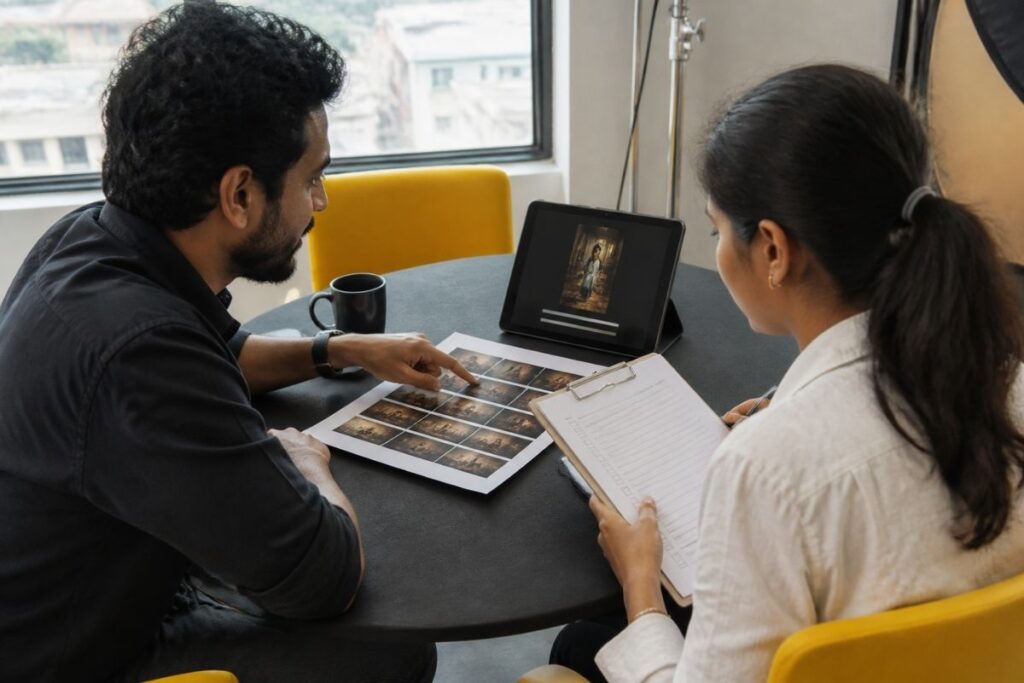
The process starts with an honest call on whether AI is the right route for the idea. Script, storyboard and a visual reference board are signed off before anything is generated. Post-production stays human: pacing, sound design, motion graphics, colour, voiceover and captions.
Deliverables arrive as a 16:9 master plus 9:16 and 1:1 reframed, cut-downs, captions burnt in and supplied separately, alternate hooks and end-cards as individual files, and still frames for thumbnails. Tamil and English voice-over and subtitles are available. On delivery and full payment the client owns the films with no time limit. A single social ad runs about one to two weeks from approved script; a multi-scene commercial is closer to three to four. One point of contact, and a Chennai team you can sit with for the edit review.
What to prepare before you brief an AI ad
- The one thing the ad must make a viewer do: call, click, visit or remember.
- Which platforms and ratios the media plan needs, and how many variants.
- The product, in hand, for a plate shoot; or the render, if it does not exist yet.
- Brand assets: logo, colours, fonts and any mandatory disclaimers or prices.
- Languages: Tamil, Hindi, English, or all three.
- Any real people who will appear, and their written consent.
- The launch date, so revision rounds can be scheduled backwards from it.
- Whether you need project files and source assets handed over, so it is written into scope.
[Image 3 goes here]
Frequently asked questions
Are AI generated ads suitable for a small business?
Yes, if the job fits. AI generated ads for small business work best for product ads that need a striking setting, offer variants for testing, and multilingual versions. They work less well when the business sells trust in real people, such as a clinic or a school, where the people should still be filmed.
Is an AI video ad always cheaper than a shoot?
No. Published Indian rates put a 30-second AI ad film at roughly ₹75,000 to ₹1.5 lakh against about ₹5 lakh for a basic TVC. But a simple 15-second offer ad shot in half a day can cost less than generating it. The saving appears when the idea needs locations, scale or many variants.
Can AI ads be made in Tamil?
Yes. The same approved ad can carry Tamil, Hindi and English voiceover and subtitles, delivered as separate files. Captions should be checked by a Tamil speaker rather than left to auto-generation, since script and names are where machine captions fail most often.
Do I have to disclose that an ad uses AI?
For synthetic presenters, avatars or voices, yes. India’s amended IT Rules from February 2026 require clear labelling of synthetically generated content, and several ad platforms ask for disclosure in the ad flow. A short on-screen or caption note is enough. A generated background behind a real filmed product is a lower-risk case, but ask your producer.
How long does an AI video ad take?
A single AI product ad for social usually takes one to two weeks from approved script to final file. A multi-scene generative AI commercial with voiceover and music is closer to three to four weeks. Variants from an approved concept come faster, because the world and the plates already exist.
Who owns an AI-generated ad?
With a professional producer, you should. Check that the contract transfers the final films to you on full payment, with no time limit, for paid media, social, website, retail screens and events. Ask separately for project files and source assets if you want them, and expect that to be written into scope.
What is the difference between an AI ad film and a traditional ad film?
An AI ad film generates most of its environments and visuals, with the product or talent filmed as a plate where accuracy matters. A traditional ad film shoots everything with a crew, cast and location. The AI ad film vs traditional ad film cost gap comes from the shoot day, not from the creative or the edit.
Decide by the idea, not by the hype
AI video ads for businesses in Chennai are a tool, not a shortcut. They earn their place when the concept needs a world you cannot build, a volume of variants a shoot cannot deliver, or a language version without a second crew. They lose when the ad depends on a real face, a real finish or a performance. Write down what the ad must do, decide what has to be real, and brief a team that will tell you when a camera is the better answer.
[CTA: Get a Quote on WhatsApp]